The way consumers discover products online is changing fast. For years, ecommerce experiences have revolved around search bars, category pages and endless scrolling. Consumers knew what they wanted, searched for it, filtered results and compared products themselves.
Now, AI is starting to reshape that journey entirely.
Following the launch of the ASOS AI Stylist experience within ChatGPT, we are seeing a clear shift towards conversational commerce, personalised recommendations and AI powered shopping experiences that feel far more intuitive for users.
For consumer brands, this represents a major opportunity.
The brands that successfully integrate AI into the customer journey are likely to create faster buying experiences, stronger engagement and more personalised interactions at scale.
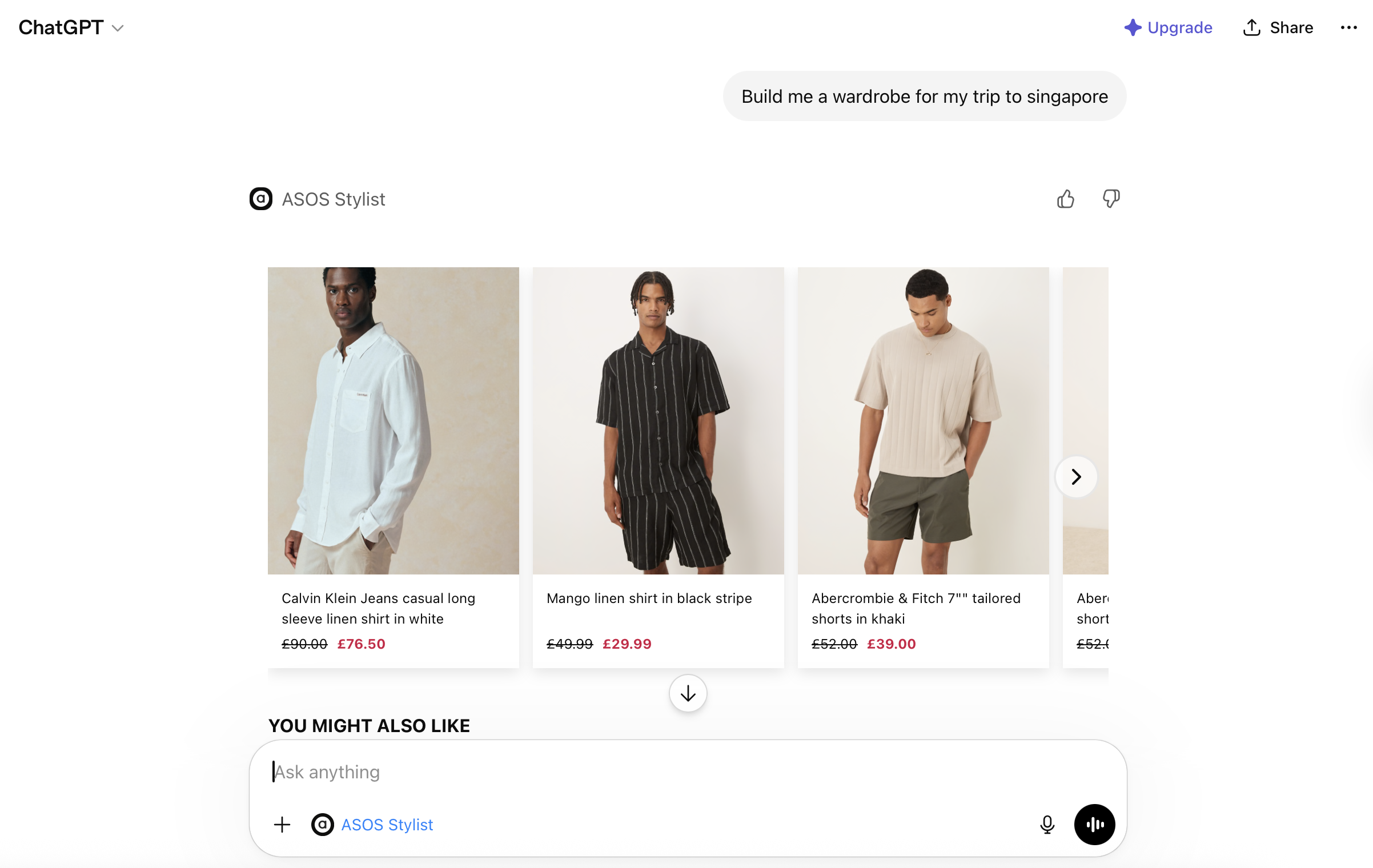
The Rise Of Conversational Commerce
The ASOS AI Stylist launch reflects a wider change in online behaviour.
Consumers are increasingly comfortable using AI tools to:
- discover products
- compare options
- build outfits
- research purchases
- get recommendations
- answer questions instantly
Rather than manually searching through dozens of product pages, users can now describe what they are looking for in natural language.
A customer might ask:
- “Build me a summer wardrobe for a holiday in Ibiza”
- “What should I wear for a smart casual wedding?”
- “Show me outfits that suit cool toned skin and blue eyes”
- “Recommend trainers that work with relaxed tailoring”
The experience becomes conversational, personalised and much faster.
This style of interaction feels natural to younger consumers who are already using AI tools in their everyday lives for planning, researching and decision making.
As AI adoption continues to grow, consumer expectations around ecommerce experiences are evolving with it.
Why Brands Are Investing In AI Customer Journeys
There are several reasons why B2C brands are moving quickly to adopt AI powered experiences.
Personalisation At Scale
Modern consumers expect tailored recommendations.
AI allows brands to deliver personalised suggestions based on preferences, behaviour, style choices, browsing history and purchasing habits without relying entirely on static recommendation engines.
This creates a shopping experience that feels more relevant from the first interaction.
Reduced Friction
Traditional ecommerce journeys often involve multiple steps before a customer finds the right product.
AI assistants simplify that process by guiding users directly towards curated recommendations and narrowing down choices in real time.
Reducing friction within the buying journey can have a significant impact on conversion rates and customer satisfaction.
Improved Product Discovery
One of the biggest challenges for ecommerce brands is helping customers discover products they may not have searched for directly.
Conversational AI opens up discovery opportunities by understanding context, preferences and intent rather than relying solely on keywords.
This creates a more engaging browsing experience while increasing visibility across a wider range of products.
Stronger Customer Retention
Consumers are more likely to return to platforms that provide personalised, efficient and enjoyable experiences.
AI powered interactions can help brands build stronger long term relationships through tailored communication and ongoing engagement.
AI Is Becoming Part Of The Ecommerce Experience
The ASOS launch also highlights how AI is becoming embedded within the platforms consumers already use every day.
Rather than forcing users onto separate apps or tools, brands are increasingly meeting customers within existing digital ecosystems.
This shift could have major implications for:
- ecommerce strategy
- digital marketing
- customer acquisition
- platform partnerships
- brand visibility
- search behaviour
As conversational interfaces become more common, brands may need to rethink how products are surfaced online and how customers discover them in the first place. Search behaviour itself is evolving.
Consumers are starting to ask AI assistants for recommendations instead of relying entirely on traditional search engines or social media platforms.
For brands, visibility within AI driven ecosystems may become just as important as visibility within Google search results over the next few years.
The Talent Behind AI Driven Consumer Experiences
As brands invest more heavily in AI powered customer journeys, hiring demand is shifting alongside it.
Businesses building conversational commerce experiences now require a blend of technical, creative and commercial talent to support these initiatives.
We are already seeing growing demand for:
- AI product managers
- machine learning engineers
- conversational UX designers
- AI focused growth marketers
- recommendation system specialists
- data engineers
- ecommerce AI strategists
- prompt engineers
The companies that move early in this space will likely compete heavily for emerging AI talent as adoption accelerates across retail, fashion and ecommerce.
For recruitment businesses operating within AI and emerging technology markets, this represents a significant long term opportunity.
What Happens Next?
The ASOS AI Stylist launch feels like an early glimpse into where digital consumer experiences are heading.
AI is gradually becoming part of how consumers browse, discover and purchase products online.
Over time, we are likely to see more brands experimenting with:
- AI shopping assistants
- conversational storefronts
- personalised AI recommendations
- virtual styling experiences
- AI powered customer support
- integrated commerce within AI platforms
For consumers, the experience becomes faster and more personalised.
For brands, the opportunity lies in building customer journeys that feel seamless, intuitive and genuinely useful.
The businesses that adapt early may gain a significant advantage as AI continues to reshape how people interact with products and services online.
Final Thoughts
The ASOS AI Stylist launch is about far more than fashion retail.
It signals a broader shift in how brands engage with consumers in an AI first digital landscape.
As conversational commerce grows and AI becomes increasingly integrated into online experiences, customer expectations will continue to evolve alongside the technology.
For B2C brands, the focus is no longer simply on having an ecommerce presence. The next stage of growth will come from creating intelligent, personalised and frictionless experiences that align with how consumers already want to interact online.